
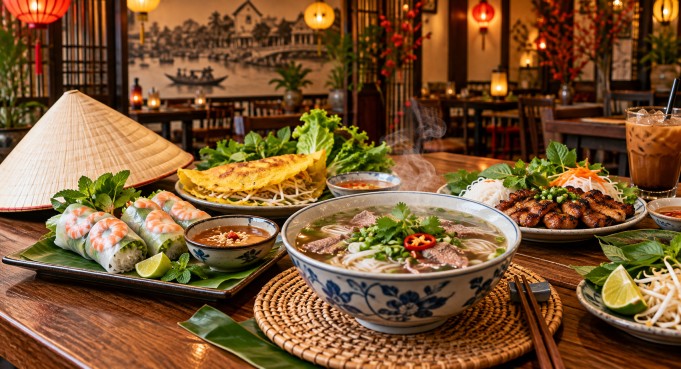
A great Vietnamese meal is about more than a familiar dish on the menu. Authenticity comes from the ingredients, preparation methods, balance of flavours, traditional recipes and attention to the details that give Vietnamese cuisine its distinctive character.
Traditional Ingredients and Balanced Flavours
One of the first things to consider when evaluating a Vietnamese restaurant in Calgary is how it approaches ingredients. Vietnamese cuisine traditionally brings together fresh herbs, vegetables, rice, noodles, meats, seafood, aromatic spices and sauces to create dishes with contrasting yet complementary flavours.
Freshness matters because many Vietnamese dishes depend on ingredients that add brightness and texture. Herbs such as Thai basil, cilantro and mint can provide freshness, while ingredients such as bean sprouts, lime and fresh chilies add crunch, acidity or heat.
Fish sauce is another important component of Vietnamese cooking. It contributes a deep savoury quality to many sauces, marinades and dishes. Other ingredients, including garlic, ginger, lemongrass and rice vinegar, can contribute additional layers of aroma and flavour.
Authenticity does not necessarily mean that every dish must taste intense. Vietnamese cuisine is often appreciated for its balance between sweet, sour, salty, bitter and spicy elements. The goal is to allow these flavours to work together rather than allowing one ingredient to overpower everything else.
Traditional Recipes and Cooking Techniques
Recipes passed down through generations can provide an important connection to Vietnamese culinary traditions. While restaurants may adapt dishes to suit local preferences or ingredient availability, retaining traditional preparation methods can help preserve their original character.
Broth-based dishes are a good example. A carefully prepared broth can take time to develop its depth of flavour, particularly when aromatic ingredients and spices are allowed to infuse gradually. The final result should have complexity without relying solely on heavy seasoning.
Grilling, steaming, stir-frying, braising and frying are also common techniques in Vietnamese cuisine. Each method brings a different texture and flavour to ingredients.
A Vietnamese restaurant in Calgary can also demonstrate authenticity through the way dishes are assembled and served. Fresh herbs, sauces, vegetables and other accompaniments are not merely decorative additions; they can be integral to the overall experience.
Menu Variety and Vietnamese Dining Culture
A restaurant’s menu can reveal plenty about its approach to Vietnamese cuisine. A selection that extends beyond the most internationally recognized dishes may give diners an opportunity to explore the diversity of Vietnamese food.
Pho and banh mi are well-known examples, but Vietnamese cuisine includes a much wider range of noodle dishes, rice dishes, spring rolls, savoury pancakes, grilled meats, seafood and regional specialties.
Exploring Regional Differences
Vietnamese food varies considerably from one region to another. Northern, Central and Southern Vietnamese cuisines have their own flavour profiles, ingredients and culinary traditions.
Northern cuisine is often associated with more restrained seasoning and an emphasis on subtle flavours. Central Vietnamese food can feature bolder seasoning and spicier dishes, while Southern cuisine is often known for sweeter flavour profiles and an abundant use of fresh ingredients.
A Vietnamese restaurant in Calgary that introduces diners to different regional dishes can provide a richer understanding of the cuisine rather than presenting Vietnamese food as a single, uniform style.
Dining customs can also contribute to the experience. Sharing several dishes, adding fresh herbs at the table and using dipping sauces are examples of practices that make Vietnamese meals interactive and social.
What Diners Should Look For
Authenticity does not have to mean refusing every modern interpretation. Restaurants naturally adapt to their surroundings, and local ingredient availability, dietary preferences and customer expectations can influence menus.
Instead, diners can look for signs that the food is rooted in genuine Vietnamese culinary traditions. Fresh ingredients, carefully prepared broths, traditional seasonings, balanced flavours and thoughtfully prepared accompaniments are all positive indicators.
The staff’s knowledge can also be helpful. Servers who can explain ingredients, regional differences and traditional ways of enjoying particular dishes can make the dining experience more informative and enjoyable.
Presentation should support the food rather than overshadow it. Vietnamese cuisine often has a natural visual appeal because of its combination of colourful vegetables, fresh herbs, noodles and carefully prepared proteins.
Ultimately, authenticity is about consistency and respect for the cuisine. A Vietnamese restaurant in Calgary does not need to reproduce every aspect of a restaurant in Vietnam to offer an authentic experience. What matters is whether its food demonstrates an understanding of Vietnamese ingredients, techniques, flavours and traditions.
For diners, the best approach is to remain curious. Try a familiar dish such as pho, then explore something less familiar, such as bun bo Hue, banh xeo or a regional rice or noodle specialty. This can reveal just how varied Vietnamese cuisine can be.
FAQs
- What makes Vietnamese food authentic?
Authentic Vietnamese food generally reflects traditional ingredients, preparation techniques and balanced flavours. Fresh herbs, rice noodles, fish sauce, aromatic spices and carefully prepared sauces are commonly important components. - Is pho the only authentic Vietnamese dish?
No. Pho is one of Vietnam’s most recognizable dishes, but the cuisine includes many other specialties, including banh mi, bun bo Hue, banh xeo, fresh spring rolls, rice dishes and regional recipes. - Why are fresh herbs important in Vietnamese cuisine?
Fresh herbs can add aroma, flavour, freshness and texture to Vietnamese dishes. They are often served alongside meals so diners can adjust the balance of flavours according to their preferences. - Does authentic Vietnamese food have to be spicy?
No. Vietnamese cuisine includes both mild and spicy dishes. The level of heat varies by recipe and region, and chili can often be added separately according to individual taste. - How can I identify an authentic Vietnamese restaurant?
Look for fresh ingredients, traditional cooking techniques, balanced flavours and a varied menu featuring more than just familiar dishes. Staff who understand the ingredients and culinary traditions can also be a useful indicator.
At Blue Danube Restaurant, we believe memorable dining starts with thoughtfully prepared food and a welcoming atmosphere. Visit us to explore our menu and enjoy a satisfying meal with family and friends.