
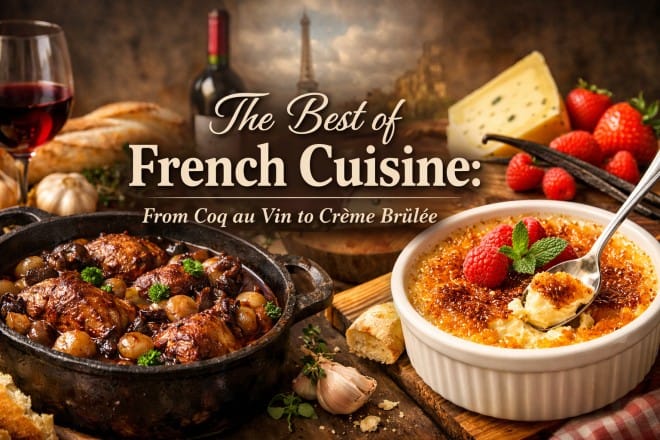
French cuisine represents a culinary tradition that has long been respected and admired throughout history. Its unique style, influenced by thousands of years of practice in various French regions, epitomizes a balance of method, patience, and an almost poetic respect for the food itself. It is a style not focused on excess, but rather on harmony, where flavour, texture, and presentation integrate into a seamless whole. Every dish of French cuisine tells a story based on the history, geography, and culture from which it was created, whether it is a rustic country stew or an elegant dessert.
The essence of French cuisine is the use of quality ingredients rather than complexity. Meals are created using fresh fruits and vegetables, meats that have been carefully selected, and techniques that have been passed down for generations. The way in which French cuisine has influenced chefs and restaurants around the world, while still maintaining a connection to its roots, reflects the principles and values behind its creation.
The Soul of French Cooking: Tradition and Technique
To understand French cuisine, one must appreciate the importance of technique. Classic methods such as braising, sautéing, and slow simmering are not shortcuts but deliberate processes that unlock depth of flavour. Recipes are often passed down through generations, preserving a sense of authenticity while allowing for subtle personal touches.
Equally important is the role of sauces. From velvety reductions to delicate emulsions, sauces are treated as essential components rather than afterthoughts. They are designed to complement, not overpower, the main ingredient. This careful balance reflects the broader French approach to food—measured, thoughtful, and rooted in respect for the plate.
Meals are also social occasions. Whether enjoyed at a family table or in an elegant restaurant, French dining encourages conversation, pacing, and appreciation, turning food into a shared experience rather than a rushed necessity.
Coq au Vin: A Classic That Defines Comfort
Among the most celebrated dishes in French cuisine, Coq au Vin stands as a symbol of rustic elegance. Originally developed as a practical way to tenderize tougher cuts of poultry, this dish transforms simple ingredients into something deeply satisfying. Chicken is slowly braised in red wine, traditionally Burgundy, along with mushrooms, onions, herbs, and lardons.
The magic lies in time. As the chicken simmers, it absorbs the richness of the wine while releasing its own savoury depth into the sauce. The result is a dish that feels hearty yet refined, making it equally suited for a family meal or a formal dinner setting.
Coq au Vin also reflects the French belief that good food does not need to be complicated. With patience and care, even humble ingredients can become extraordinary.
Regional Diversity on the French Plate
France’s varied landscapes have given rise to an impressive range of regional specialities. Coastal areas celebrate seafood with light preparations that highlight freshness, while inland regions favour heartier dishes shaped by colder climates. Provence brings olive oil, herbs, and vegetables to the forefront, while the north is known for cream-based sauces and slow-cooked meats.
This diversity ensures that French cuisine is never static. It evolves naturally as recipes adapt to local produce and seasonal changes. Yet, despite these regional differences, there is a unifying respect for craftsmanship and balance that runs through every dish, regardless of origin.
Crème Brûlée: A Dessert of Elegant Simplicity
No exploration of French food would be complete without dessert, and Crème Brûlée is a shining example of how simplicity can feel luxurious. Made from cream, egg yolks, sugar, and vanilla, this dessert relies on precision rather than excess. Its signature contrast—the crack of caramelized sugar giving way to silky custard—creates an experience as satisfying as it is memorable.
Crème Brûlée demonstrates how French desserts focus on texture and restraint. Instead of overwhelming sweetness, flavours are clean and well-defined. Each spoonful offers comfort, indulgence, and balance in equal measure.
This dessert also embodies the French respect for tradition while leaving room for subtle creativity, whether through infused flavours or artistic presentation.
Why French Food Continues to Inspire
The enduring appeal of French cuisine lies in its ability to adapt without losing its identity. Modern interpretations may introduce lighter techniques or global influences, but the core principles remain unchanged. Attention to detail, respect for ingredients, and a deep understanding of technique continue to guide both home cooks and professional chefs.
French food teaches patience. It encourages slowing down, tasting thoughtfully, and enjoying the process as much as the result. In a fast-paced world, this approach feels both refreshing and timeless.
Experience French Flavours at Blue Danube Restaurant
If you wish to savour the elegance and warmth of classic French cooking without travelling across borders, Blue Danube Restaurant invites you to experience it at your table. Our chefs honour tradition while delivering memorable flavours crafted with care and passion. Visit Blue Danube Restaurant and let every dish turn your meal into a celebration of timeless culinary artistry.