
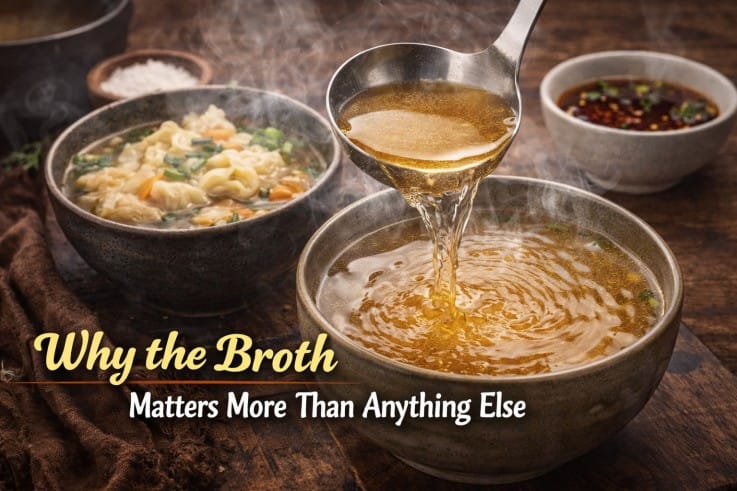
A bowl of wonton soup may look simple, but its soul lies entirely in the broth. The dumplings can be perfectly folded and generously filled, yet without a well-crafted base, the dish falls flat. In traditional Chinese cooking, broth is never an afterthought. It is patiently built, clarified, and seasoned to create a liquid that is light on the tongue yet deeply satisfying. The hallmark of an excellent wonton soup is clarity, aroma, and balance, all of which depend on how the broth is prepared and respected.
At its best, the broth should enhance the delicate wontons rather than overpower them. A well-made Wonton Soup broth carries subtle umami notes, a clean finish, and a warmth that lingers without heaviness. Achieving that balance requires attention to ingredients, technique, and time.
Understanding the Ideal Flavour Profile
The classic wonton soup broth is mild but layered. It should taste savoury first, with gentle hints of sweetness and a rounded mouthfeel. Unlike rich tonkotsu or heavily spiced broths, wonton soup relies on restraint. The goal is to let natural ingredients shine, particularly bones and aromatics.
Chicken bones are often used as the primary base because they provide a clean flavour and natural gelatin without cloudiness. Some chefs blend chicken with pork bones to deepen the savoury notes, but this must be done carefully to avoid greasiness. Ginger and scallions are essential aromatics, lending warmth and freshness. Garlic is usually minimal or omitted entirely to keep the flavour refined.
Seasoning should be precise. Light soy sauce adds salt and colour without dominating, while a touch of white pepper provides gentle heat. Sesame oil, if used, is added sparingly at the end. These components work together to create a Wonton Soup broth that feels comforting yet elegant.
The Importance of Clarity in a Great Broth
Clarity is more than visual appeal; it signals care and technique. A cloudy broth often means the bones were boiled too aggressively or impurities were not skimmed properly. For wonton soup, clarity reflects purity of flavour. A clear broth allows diners to see the wontons resting at the bottom of the bowl, a small detail that elevates the dining experience.
To achieve clarity, bones should be blanched briefly before simmering. This step removes blood and surface impurities that cause cloudiness. Once the broth begins to cook, it should never be allowed to boil vigorously. A gentle simmer preserves both clarity and subtle flavour. Regular skimming during the early stages ensures the final liquid remains clean and light.
Straining is equally important. Fine mesh strainers or cheesecloth remove remaining particles, resulting in a broth that looks almost translucent. This level of care transforms a simple soup into something memorable and refined.
Traditional Ingredients That Make a Difference
Authenticity in wonton soup comes from respecting traditional ingredients. Dried shrimp or dried flounder, used sparingly, can add depth without overpowering the broth. These ingredients are common in Cantonese kitchens and are prized for their natural umami.
Shaoxing wine may be added in small amounts to enhance aroma and complexity. It should never dominate, but rather sit quietly in the background. Rock sugar is sometimes included in very small quantities to balance savoury notes, especially if pork bones are part of the base.
The result of combining these elements is a Wonton Soup broth that tastes complete without being heavy. Every sip should feel intentional, as though nothing extra was added and nothing essential was missing.
How Professional Kitchens Maintain Consistency
In a restaurant setting, consistency is key. A broth must taste the same from one day to the next, regardless of volume or service pressure. Professional kitchens achieve this by controlling ratios, cooking times, and seasoning adjustments with precision.
Large batches are often prepared in advance, cooled properly, and reheated gently to preserve clarity. Seasoning is adjusted only after reheating, as flavours can shift slightly during cooling. This disciplined approach ensures that each bowl meets the same standard, whether it is served at lunchtime or late in the evening.
Restaurants that take pride in their soup understand that guests may not consciously analyse the broth, but they will feel the difference. A thoughtfully prepared Wonton Soup broth leaves a lasting impression that keeps diners coming back.
Common Mistakes That Compromise Quality
One of the most common errors is rushing the process. Broth cannot be hurried without sacrificing depth and clarity. Another mistake is over-seasoning, which masks the natural flavour of the bones and aromatics. Using dark soy sauce, for example, can overpower the broth and muddy both flavour and appearance.
Excessive oil is another issue. While a small amount of fat adds body, too much creates a greasy surface that detracts from the soup’s elegance. Skimming fat during simmering and chilling the broth to remove excess fat are simple but effective techniques.
Avoiding shortcuts is essential. Stock cubes or commercial bases may save time, but they lack the nuance and freshness of a properly made broth. For a dish as iconic as wonton soup, authenticity and patience always show in the final result.
Why Broth Defines the Dining Experience
Wonton soup is often ordered as a comfort dish, something familiar and reassuring. Yet the difference between an ordinary bowl and an exceptional one lies almost entirely in the broth. Texture, aroma, and flavour all originate there. A clear, balanced broth elevates even the simplest wonton filling.
When prepared with care, the broth invites slow sipping, encouraging diners to appreciate each element of the dish. It becomes more than just a soup; it becomes a quiet moment of warmth and satisfaction.
At Blue Danube Restaurant, we believe great dishes begin with great foundations. Our wonton soup is crafted with patience, tradition, and respect for flavour. Visit Blue Danube Restaurant and experience a bowl of wonton soup where every detail, especially the broth, is made to be remembered.